
The Pace Problem: What Happens When the Art Market Finally Catches Up to the Mega Galleries?
As Pace restructures, Daddy looks at collector demographics, auction-house economics, and the workers and artists left to absorb the fallout.

The art world this week was filled with another news cycle and scandals that could only, in my mind, be compared to a West Wing plotline when, in Season 2, Jed Bartlet, the liberal lion from New Hampshire who is up for reelection, reveals he has MS. From there the craziness ensues, and the number of revelations and people involved is something you need a Politico flow chart for. For the record, I felt a bit like White House Press Secretary C.J. Cregg trying to keep the trains running and do my best, but sometimes even our best can’t escape a news cycle.
One of the biggest art market headlines to drop this week was an announcement that came via the New York Times on Wednesday night outlining that Pace Gallery, one of the largest galleries in the industry, would be downsizing by essentially firing 50 members of its staff and 50 artists. Headlines like this are not new, and this is the latest to hit what I dubbed in 2025 the Daddy Deathpocalypse. We have been bracing for market contractions, shrinkages, and layoffs for some time.
Last month people wanted to pretend the market was back because the auction houses managed to, under extremely choreographed circumstances, sell billions of dollars worth of art. In reality, several millionaires had, let’s be honest, some of the most expensive garage sales in recent decades. Christie’s alone brought in more than $1 billion during its marquee May sales. The headlines suggested confidence had returned to the market.
To Daddy, Pace’s announcement suggests the opposite.
The very top of the market may still be functioning, but the infrastructure underneath it continues to contract. No one wants to say the word recession, but let’s be real. The Baby Boom generation is retiring, dying, or passing collections down to family members who often don’t have the same appreciation, motivation, or inclination to collect art. For decades the market benefited from a generation of collectors who built vast collections and treated collecting as both a passion and a status symbol.
What happens when the last generation of legacy billionaire collectors is gone? What happens if their heirs would rather sell than spend the next twenty years building collections of their own? And what happens if the next generation of millionaires and billionaires simply collects differently? ust as importantly, what happens to the artists, gallery workers, and larger ecosystem that grew up around a market built on those collectors? Those are questions hanging over the entire art market, and even Pace is not immune to them.
The gallery was founded in 1960 in Boston on Newbury Street by OG daddy Arne Glimcher. Newbury, which is arguably the Fifth Avenue of that city, was also a prominent player in the Boston gallery scene before Pace eventually moved to NYC. Pace has been credited with helping foster the careers of industry titans such as Mark Rothko, Louise Nevelson, Agnes Martin, and Claes Oldenburg, among others. This support helped cement its status in the industry and within the broader story of contemporary American art as we know it today.
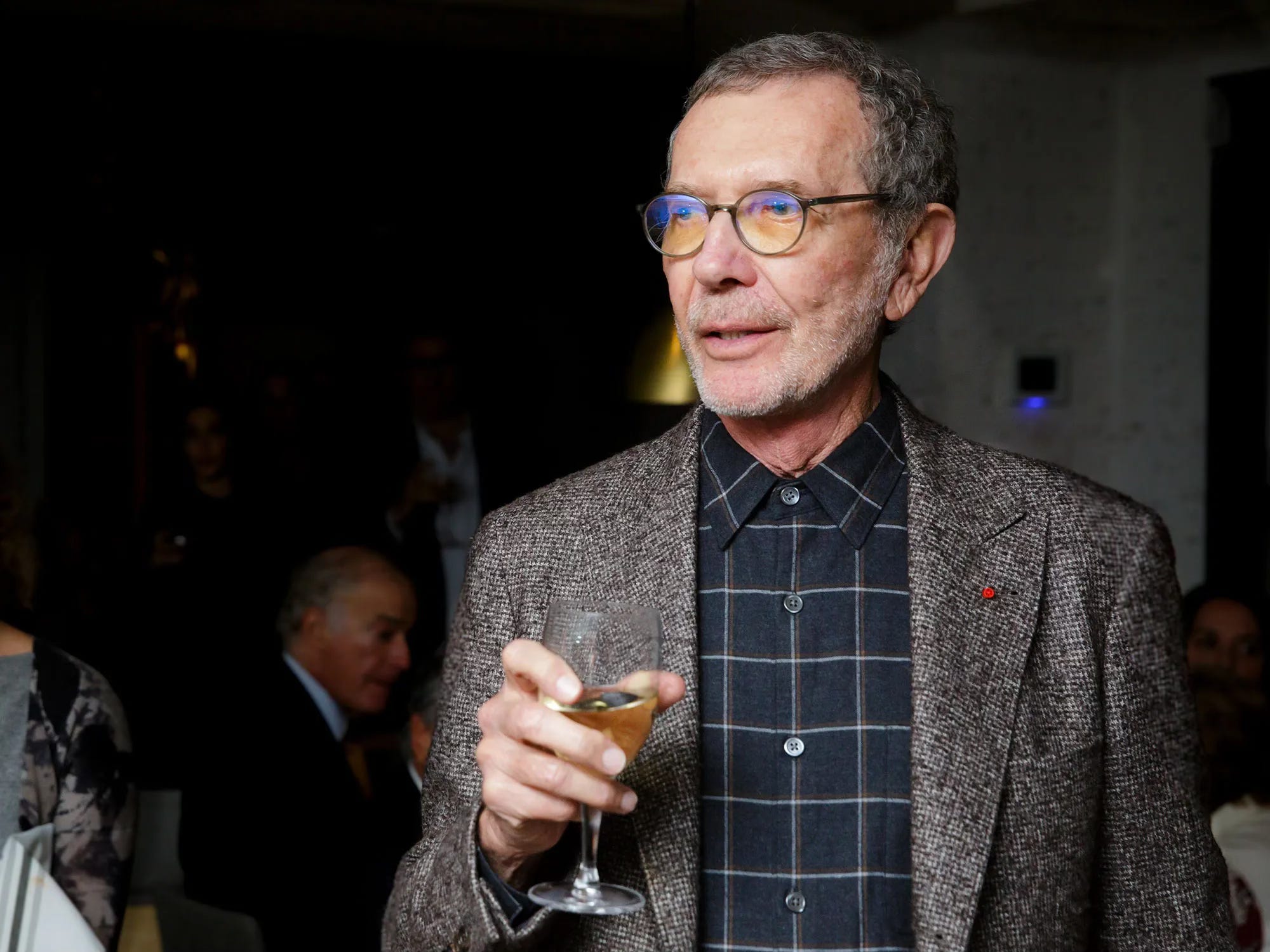
OG Daddy Pace.
In 1993, the gallery merged with Wildenstein & Co., helping expand its reach and the kinds of art it dealt in. The merger allowed Pace to acquire different segments of the art market, moving into high-end Old Masters and Impressionists. From there the upward mobility continued, and Pace began expanding on a global scale, becoming a mega gallery on par with Gagosian, H+W, and a handful of others who can claim that space, with outposts in LA, London, Geneva, Berlin, Tokyo, and Seoul.
In 2019, following the rise of the Pace Wildenstein years, they moved into a massive compound in Chelsea, solidifying their mega gallery status and signaling to the rest of the art world that their multifloor operation was a fortress.
Now, seven years later, the market and the gallery world are looking a little different. The gallery turns 65 this year, and this new phase marks a broader shift in the art world and how even larger commercial galleries are struggling within today’s economy.
Last summer we had the closure of gallery after gallery, all small to mid-tier, from Venus Over Manhattan, Kasmin, which was refolded and rebranded as Olney Gleason, CLEARING, Jack Hanley, Tim Blum, Stephen Friedman this year, and others. Two standouts were Tim Blum and Stephen Friedman. What first looked like a clean and almost elegant exit last summer from Blum, formerly of Blum & Poe, turned into a bigger controversy as Artnet reported staff being notified within days that their jobs were lost and artists who no longer had representation having to figure out logistical issues. Stephen Friedman faced similar controversy surrounding its closure as well, with both staff and artists struggling to pick up the pieces after the announcement.
While the broader picture with Pace is not clear in terms of how the news was delivered and what the reality for staff is like, the warning signs seemed to be there given how things played out over the last year and a half.
“The whole art gallery system became too big, too commercial, too impersonal and too corporate. We all know it’s true. But you actually have to do something to adapt to it. You have to make some substantial changes,” Marc Glimcher told The Times this week.
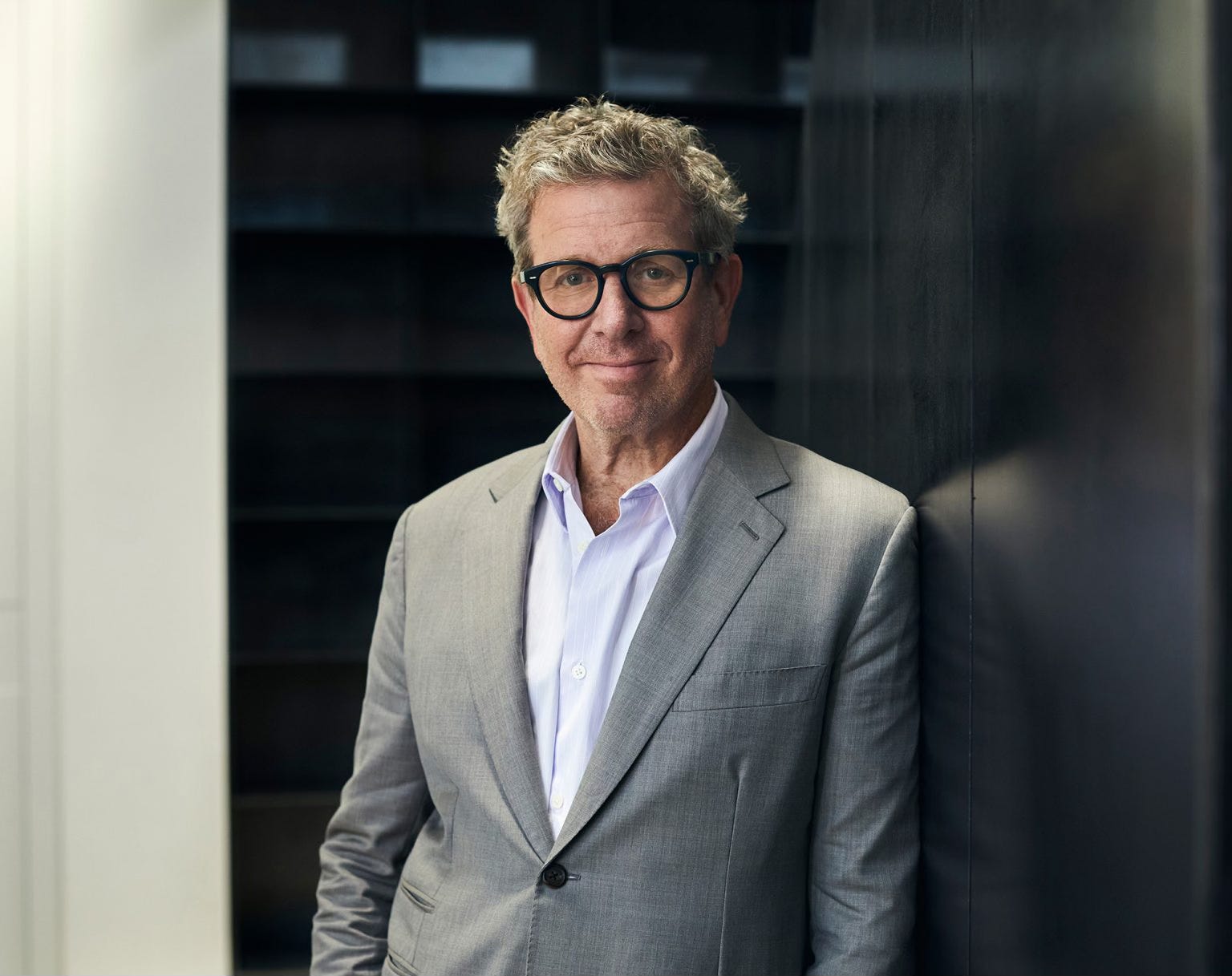
BB Pace who announced the layoffs in the NYT.
In March of 2025, rumors emerged that there might be some kind of merger between Sotheby’s auction house and the mega gallery. The story was eventually written about in ARTnews but left the industry speculating about what this might actually look like. Since the COVID-19 pandemic there has been a major pivot toward online formats that have auction-house underpinnings.
We saw the rise of this with Fair Warning, which came to define the space in a variety of ways and was founded by former Christie’s Chairman for the Post-War & Contemporary Art Department, Loïc Gouzer. From there David Zwirner launched Platform in 2021 as a kind of online marketplace for independent galleries. Most recently, in May, Levy Gorvy Dayan launched its own version, similar to Fair Warning, called LGD Hammer, which combines real-time bidding with artworks offered through its own secure network rather than a traditional auction house.
However, Brett Gorvy also comes from Christie’s, which further blurs the lines between the gallery and auction worlds and expands what these kinds of platforms can potentially do. More importantly, it changes the inventory and relationships these businesses have access to. Former auction-house executives often bring decades of connections with collectors, estates, advisors, and consignors, giving them access to blue-chip works that might not otherwise come to market. The result is a growing overlap between the ways galleries sell art and the mechanisms traditionally associated with auction houses, raising questions about where those boundaries now exist and whether they matter at all.
Whether it would be some Frankenstein gallery-auction hybrid was a conversation. So too were questions about the ethics of controlling a significant portion of the art market and what a potential online platform might look like. However, the rumors were just that.
Nothing ever fully formed and, following the financial troubles Sotheby’s faced in recent years, the conversation increasingly felt speculative. The auction house saw falling sales, a downgrade into “junk” bond territory (B-minus) due to declining revenues, tightening commission margins, and elevated debt loads in 2024. That same year Sotheby’s received a $1bn cash infusion from the Abu Dhabi Sovereign Wealth Fund, raising questions about the partnership, the future of the company, and the optics of increasing reliance on Gulf capital.
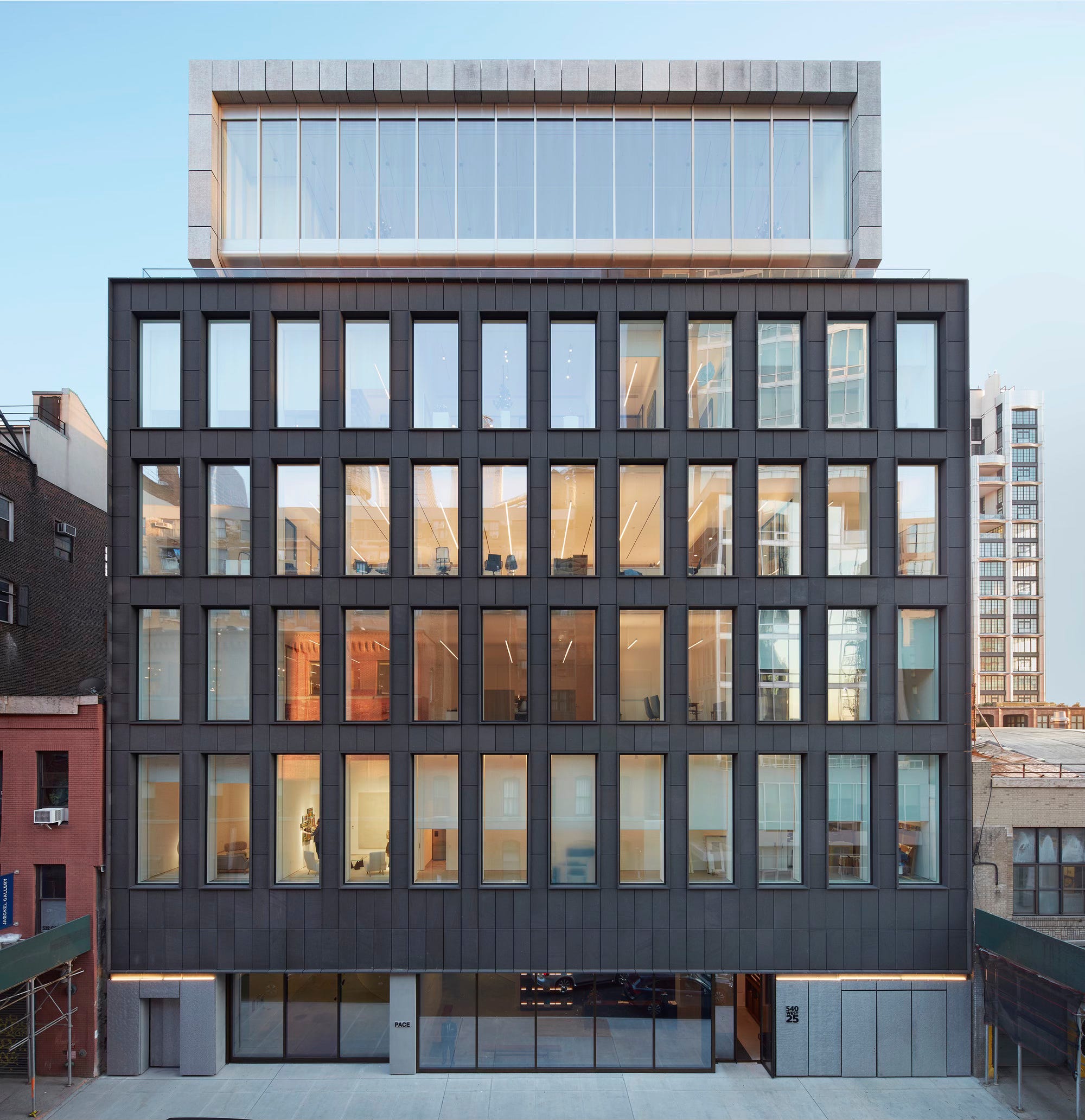
The Pace fortress that was recently penetrated with layoffs.
Sotheby’s also became the first major auction house to establish a presence in Abu Dhabi, signaling the growing importance of the Middle East within the global art market as both capital and influence continue to shift there. The move was also met with criticism from some observers over the UAE’s human rights record and broader concerns about cultural institutions becoming increasingly intertwined with state-backed wealth. This period also came with a wave of layoffs at Sotheby’s.
The merger never came about and seemed to spark even more speculation about what it all meant and the optics surrounding it. To Daddy, much of it felt like smoke and mirrors.
From there, in October of last year, Pace closed its Hong Kong outpost, which led to wider criticism about what this signaled about the financial health of the mega gallery. Three months later, an announcement came that they would be launching Pace Di Donna Schader, a new secondary-market gallery slated to open this summer that combines all three programs into one and has already shown at TEFAF NY, which shows you what having that kind of reach can do.
One of the stranger realities of the contemporary art world is that some of its biggest human stories are often framed as market stories. A gallery restructures. A gallery closes. A merger is rumored. An expansion is announced. The industry debates strategy, optics, growth, and what it all means. Panels get organized. Articles get written. People speculate in group chats and over overpriced coffees at art fairs.
Meanwhile, workers are figuring out whether they still have jobs, artists are reassessing years-long relationships, and entire careers can shift because of a headline that most people consume in less than a minute.
There is something deeply surreal about that disconnect. For the broader industry, the Pace announcement became a conversation about the market, the future of mega galleries, and whether the era of endless expansion has finally come to an end. For the people directly affected, it was not an abstract discussion about economics or strategy. It was a question of livelihoods, healthcare, rent, future opportunities, and what comes next. The same headline can function as industry analysis for one person and a life-changing event for another.
That has increasingly become the reality of the art world over the last several years. We saw it with gallery closures. We saw it with layoffs at auction houses. We saw it with mergers, restructurings, and businesses quietly scaling back. The headlines tend to focus on institutions because institutions are easier to write about. What often gets lost are the people left navigating the uncertainty that follows long after the news cycle has moved on.
Over the last year and a half we have seen the fallout from gallery closures and the impact this has on gallery staff and artists who are often left to absorb the aftershock and quite literally pick up the pieces. When galleries close, merge, downsize, or restructure, the headlines tend to focus on the gallery, the owner, or the market implications. What often gets lost are the people behind those headlines. The staff members who helped build these businesses, the artists who suddenly find themselves reevaluating years-long relationships, and the workers left navigating an increasingly uncertain industry.
That reality has played out repeatedly over the last several years. We saw it at Blum. We saw it at Stephen Friedman. We have seen it across galleries large and small. What makes the Pace announcement different is not simply the number of people affected, but the fact that it is happening at one of the most influential galleries in the world. For the workers and artists involved, this is not a story about market corrections, billion-dollar auction weeks, or industry speculation. It is a story about careers, livelihoods, and what comes next.
Seen something? Heard something? Watched a situation quietly spiral beneath expensive lighting while someone in Belgian loafers pretended not to have a panic attack over a Fontana?
Send your tips, sightings, whispers, screenshots, emotionally devastating European men, and “you didn’t hear this from me” moments to Daddy. Anonymous always welcome. Discretion guaranteed. Daddy’s inbox and DMs remain open like a psychologically unsafe hotel bar during Basel week.
And finally, thank you to everyone who has subscribed since Art Daddy officially went behind the paywall. This increasingly strange corner of the art world internet exists because of you.
Also, despite repeated fundraising efforts, neither my ex nor Larry Gagosian has upgraded to paid subscriber status...yet.
Thanks for humanising this. As well as the arts workers out of jobs the artists particularly at the level would have assistants that are also affected.