
Institutional Behavior: A Fall Study in Power, Performance, and Petty Acts of Resistance
Featuring Phyllis Kao’s prime-time injustice, Glenn Lowry’s desert diplomacy, and the debut of Daddy’s Institutional Gatekeeping Collection the weekly daddy wrap up for 10/5/25.

It’s been a chaotic week at Daddy Central. The espresso machine’s working overtime, the inbox looks like an installation about emotional endurance, and the art world’s pretending not to sweat through its turtlenecks. Henry’s gone missing, legacy galleries are shuttering like a high-stakes game of whack-a-mole, and no one seems sure if the market’s in recovery or relapse. Fall always brings a weird kind of energy — too many openings, too much gossip, and that low hum of collective anxiety disguised as networking. The champagne’s still flowing, but the bubbles feel nervous.

Henry is missing. Daddy has sent a search party.
The vibes? Uneasy. The gossip? Michelin-starred. Phyllis Kao carried a 9 a.m. auction like it was prime time, Daddy Glenn Lowry has officially exited MoMA and reemerged somewhere between diplomacy and desert glass, and dealers are smiling through gritted teeth as they quietly “consolidate.” The empire years are ending in real time, and everyone’s pretending it’s strategy.
Meanwhile, back at Daddy HQ, we’re calling it what it is: a season of beautiful chaos. The hierarchies are cracking, the money’s getting weird, and the rostrum’s turning into a stage where absence says more than any sale. It’s autumn in the art world — equal parts elegy and after-party — and Daddy’s here with the play-by-play, the shade, and the champagne-flavored truth. Buckle up. Daddy’s been watching.
Introducing The Institutional Gatekeeping Collection
In response to the Great Kenny Schachter Outing of 2025 That No One Asked For, Daddy has done the only logical thing: turned exposure into exhibition. Introducing the first official Art Daddy drop — The Institutional Gatekeeping Collection. Consider it Daddy’s official response to the gospel according to Jerry Saltz and Kenny himself — a wearable critique of the men who mistake surveillance for storytelling. Because if a middle-aged art world insider insists on “revealing” what was already a concept, Daddy might as well monetize the misunderstanding.
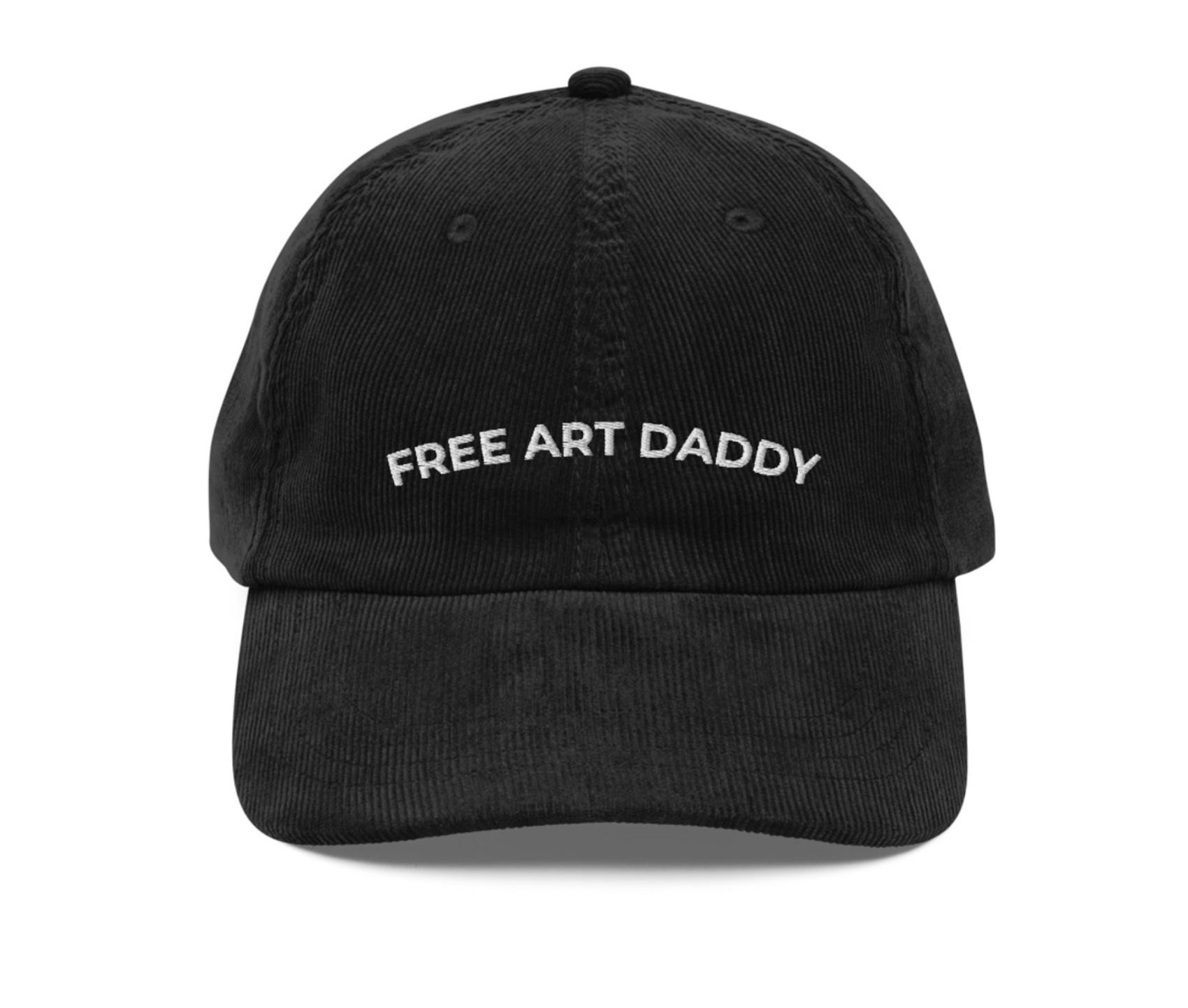
The Free Art Daddy hat.
My anonymity was always part performance art — a study in authorship, projection, and how institutions react when they can’t control the narrative. Art Daddy was never hiding; it was staging. And now, the performance continues — in cotton. The Amen Brother® Hoodie anchors the collection: heavyweight, gallery-black, and soft enough for a post-critique cry but strong enough to withstand institutional frostbite. Saltz said it. I branded it. Amen.

The hoodie in question.
The Institutional Gatekeeping Collection also includes a Free Art Daddy hat, a tote bag for the occasion, and more to come. No free shipping, no apologies — just conceptual fashion for the spiritually overexposed. It’s wearable resistance, part confession, part satire, and all Daddy.
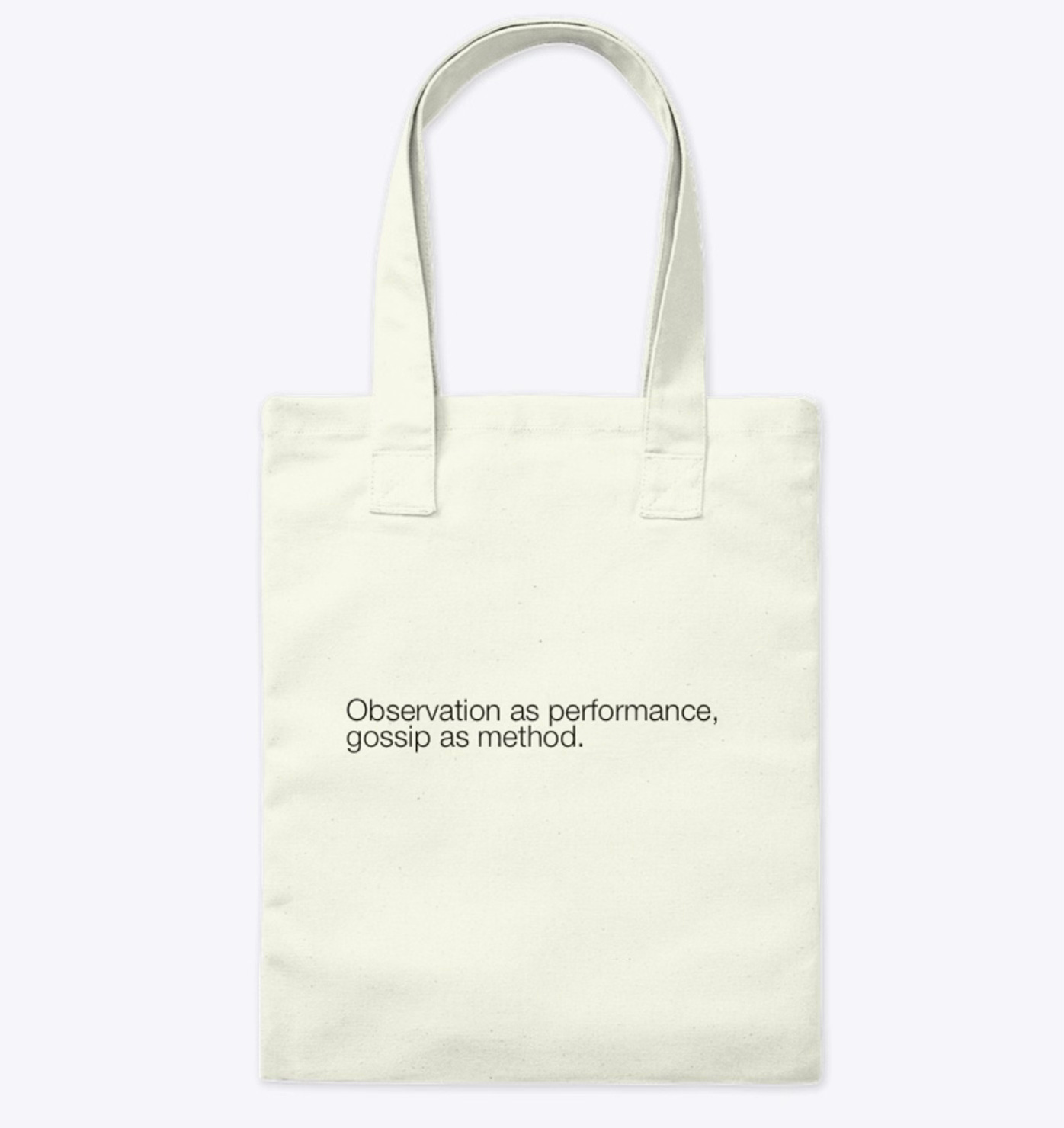
The only tote that matters.
The merch is real — the myth remains anonymous™.
Tell Your Dad
In my new Substack series, Tell Your Dad, I’m creating a space for art-world gossip, hot tips, and spicy takes. Got something that needs to be called out? Think a show, scandal, or power play deserves more attention than the usual outlets are giving it? This is where it happens. Send your tips to theartdaddyy@gmail.com or slide into my DMs @theartdaddy_.

Henry in Hiding, Phyllis in Command: The Week the Rostrum Shook
Henry Higley was nowhere to be found last weekend, his absence sending quiet shockwaves through the salesroom. For a man whose presence usually calibrates the room’s temperature, the silence felt surgical — like the market was missing one of its vital signs. Yes, he resurfaced on Instagram, confirming he’s alive (and presumably hydrated), but beyond that? Nothing. The rumor mill’s consensus is that Henry has entered the Daddy Witness Protection Program, recovering somewhere in the shadows of a secondary market safehouse. Whether he’ll be released for the November auctions remains to be seen, but right now, he’s the art world’s Amelia Earhart — a legend gone radio silent, with only speculation and screenshots to mark his trail.
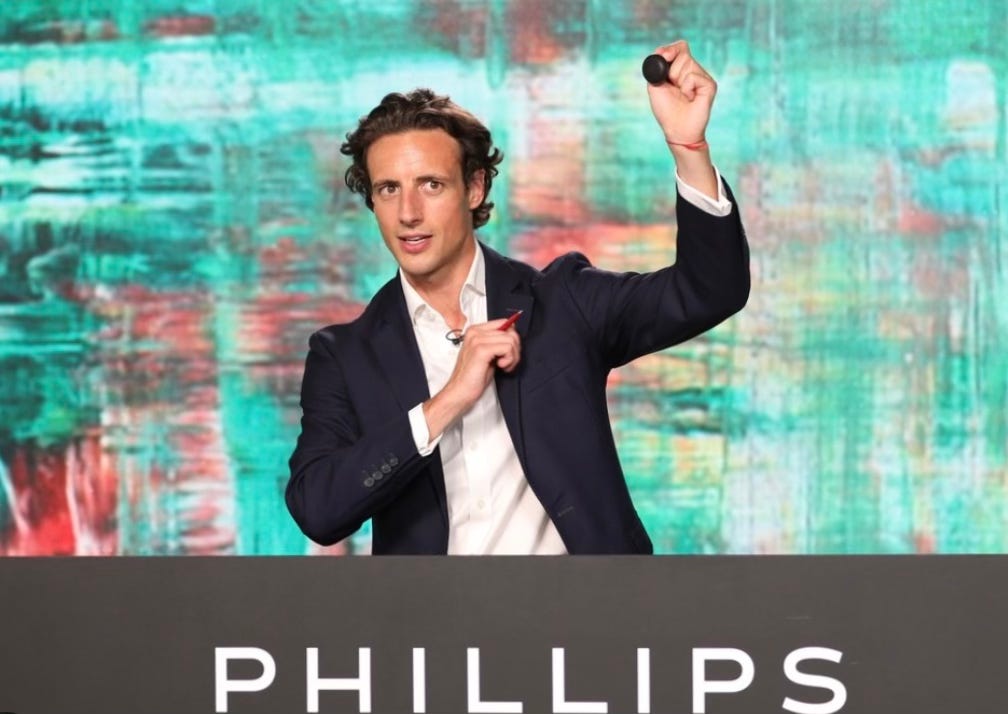
Henny on the rostrum during better times.
And then there was Phyllis Kao, who once again reminded everyone that the rostrum is her runway — even when the house refuses to treat her like the headliner she is. A 9 a.m. auction? For Kao? Be serious. That’s not a slot, that’s a slight. This is a woman who deserves more than the Sotheby’s Café barista shift — she deserves the evening sale spotlight, the full house, the camera trained on her as she turns commerce into choreography. Yet despite the slight in the timing, she still brought her famous edge — that razor-sharp composure, that espresso-fueled authority that slices clean through market fatigue. Her cappuccino-Lichtenstein shift was pure mastery: poise, theater, caffeine management, and the faintest wink that says she knows exactly how good she is. Kao isn’t just running sales — she’s running circles around the structure that underestimates her. She’s the real deal, and the fact she’s still being treated like a warm-up act says more about the system than it ever will about her.
Daddy’s long been a Glenn Lowry fan — the kind who could talk curatorial expansion and capital campaigns in the same breath as couture and control. After three decades at the top, Glenn Lowry is finally closing his MoMA chapter, stepping down from the kind of perch most museum directors spend lifetimes crawling toward. But instead of sailing off into emeritus oblivion, Daddy Glenn is pivoting — East. In his recent podcast interview, Lowry revealed he’s been spending serious time in the Middle East, working with the Islamic Arts Biennale in Jeddah and advising museums across the region. It’s not retirement; it’s redeployment. After turning MoMA into a global behemoth, he’s now chasing the next frontier — places where culture isn’t calcified by legacy but actively under construction. Glenn’s not just leaving; he’s relaunching.
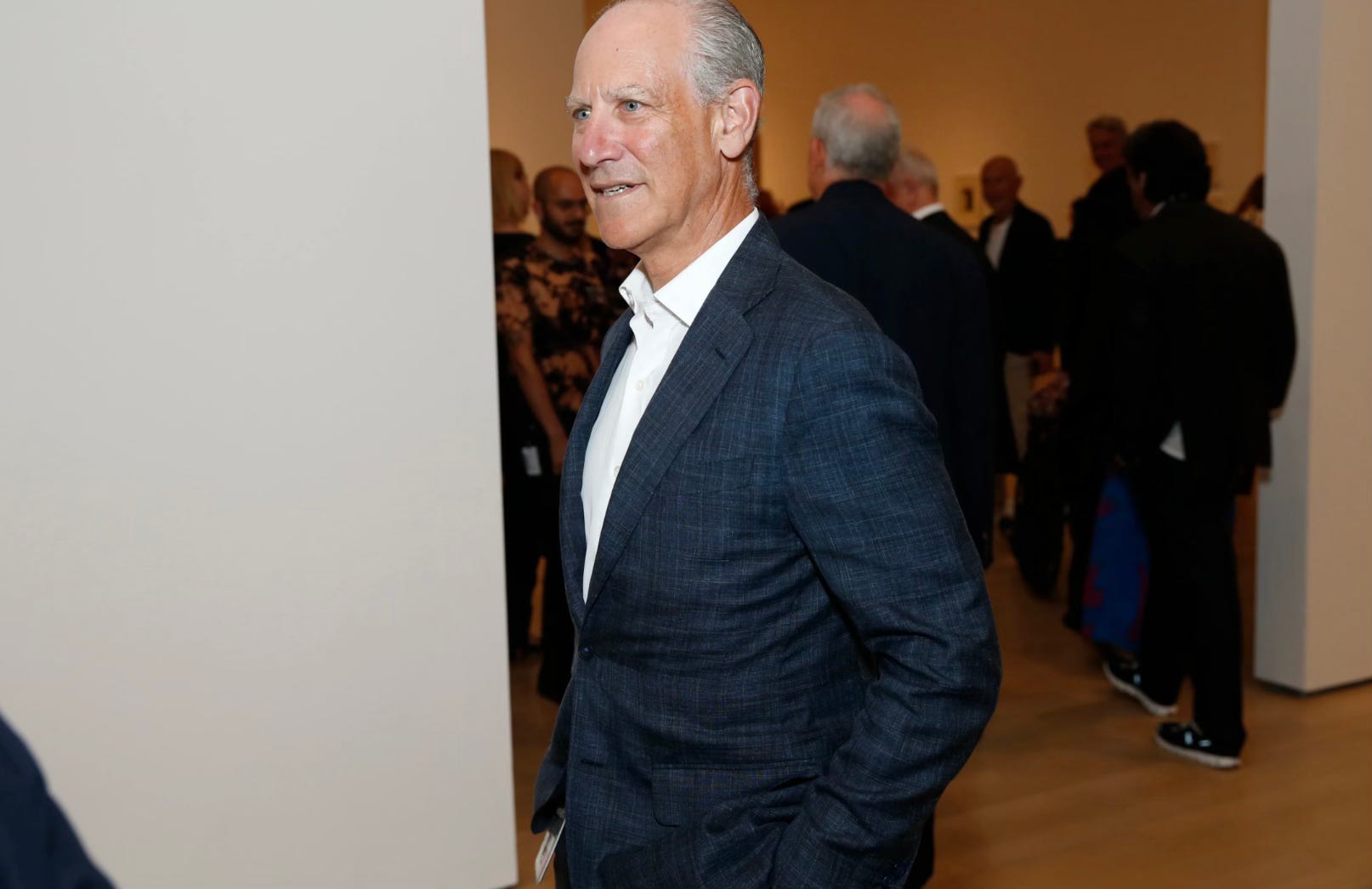
Daddy Glenn will be deeply missed.
And let’s be clear: this isn’t a gentle fade-out. Lowry’s exit is strategic, cinematic — Daddy energy through and through. He’s trading Midtown marble for desert glass, boardrooms for biennials, and the same old donor circuit for a global stage that’s still being built. Meanwhile, Christophe Cherix, the longtime chief curator of drawings and prints, has been crowned successor — and let’s just say it’s giving beige. A paper pusher for a paper department. Cherix’s appointment feels less like vision and more like museum HR gone rogue: a man promoted because he was already in the building and knew where the toner was. The art world wanted a director; MoMA gave us a placeholder with a filing system.
Lowry was a global operator — part diplomat, part dealer, part Daddy. Cherix? He’s the human equivalent of an off-white wall label: technically functional, emotionally vacant. The shift from Glenn’s machined glamour to Christophe’s print-room politeness marks not a new era, but a soft downgrade — the cultural equivalent of swapping champagne for seltzer. Daddy tips his hat to Glenn Lowry, who understood the theater of power; as for MoMA’s new leading man, we’ll see if he can even find the lights.
Another One Bites the Dust: Pace Pulls Out of Hong Kong as the Gallery Daddy Era Continues to Collapses
For those keeping score, the 2025 gallery casualty list is starting to sound like a whispered roll call from the afterparty years: Blum, Venus Over Manhattan, Clearing, Kasmin, Almine Rech London, and now Pace Hong Kong. The latest “closure-but-not-really” move—Pace quietly shuttering its Hong Kong gallery while claiming to keep an “office” open—feels like a perfect symbol for where we are: the global expansion hangover. On paper, there’s still a foothold in Asia; in practice, it’s probably one intern with a laptop at an internet café in Central answering emails for optics’ sake.
The Pace retreat matters because it’s not just another mid-tier contraction; it’s one of the biggest blue-chip names tacitly admitting that the old model doesn’t work everywhere anymore. Hong Kong was supposed to be the bridgehead—the gateway to China, the art-market Vegas of the East. But the reality is collectors have moved to Seoul, Singapore, or straight onto their phones. Rent, politics, and attention spans have caught up with the fantasy of omnipresence. Keeping a nominal office lets them save face while cutting a seven-figure lease, but it’s a tell: the era of gallery-as-embassy is ending.
We’re watching the art world’s imperial map quietly redraw itself. The mega-dealer dream of having simultaneous outposts in London, Paris, Hong Kong, and L.A. now looks less like global dominance and more like a chain of increasingly empty luxury stores. “Strategic consolidation” is the new euphemism for retreat, and the market’s upper crust is learning what the artists they once represented already knew—mobility doesn’t always mean stability.
The closures don’t just mark financial caution; they signify a cultural shift. The spectacle economy that defined the 2010s—of champagne previews, branded tote bags, and cross-continental openings—has lost its momentum. The power daddies of that era are scaling back, regrouping, or quietly rebranding as “offices.” For those still chasing the fantasy of legacy, 2025 might be the year to remember that even the biggest names can fold back into the archive, leaving nothing behind but press releases and a ghost on the gallery map.
Artnet Wanted Stability — Instead They Got a CEO Fleeing Before the Curtain Call
Artnet just booted its CEO Jacob Pabst off the sinking ship days before the annual meeting, spinning it as “couldn’t agree on contract terms.” Please. This is less graceful exit, more panic shuffle—another in a long list of self-inflicted wounds for a site that loves to parade its data while hemorrhaging cash.
The optics are catastrophic: revenues slipping, liquidity drying up, and the one person supposed to steady the wheel walking out mid-storm. Artnet wants to be the Bloomberg of the art world, but right now it looks more like a glorified message board with a trust-fund problem.

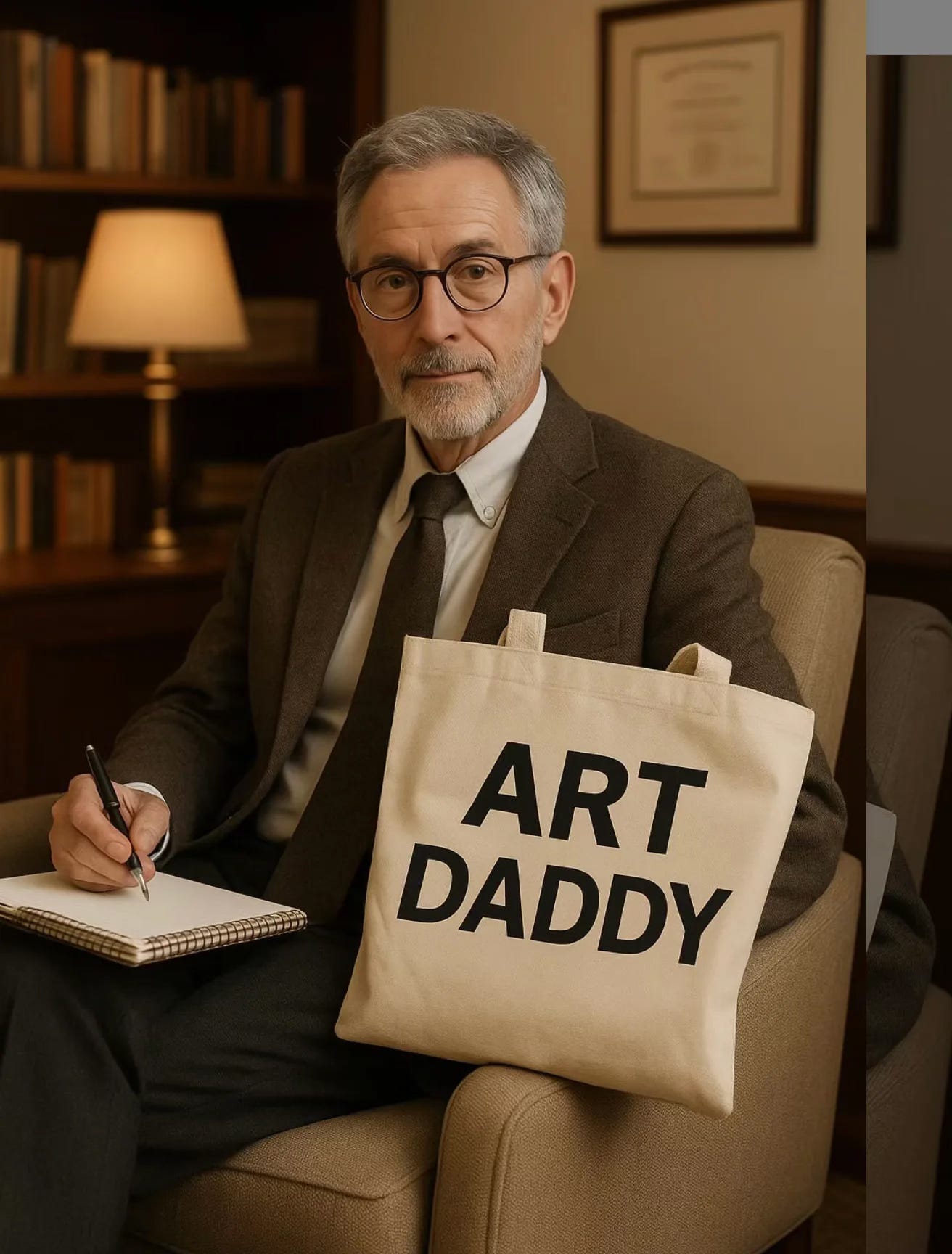
We are concerned as to why he looks AI generated but maybe he was never really real to begin with?
And here’s the kicker: Beowolff Capital circling with a takeover bid makes this resignation read like a staged clearing of the chessboard. Call it strategy if you want, but to the market it looks like yet another daddy-sized blunder—Artnet playing defense while pretending it’s still in control. The brand once traded on authority; now it trades on gossip about who’s left the building. This isn’t succession planning, it’s surrender dressed up as strategy. Another “internal adjustment” that only underlines the obvious: Artnet’s biggest auction is its own credibility, and the bids are coming in low.
Monet as Collateral: Impressionism in the Pawn Shop
George Allen Weiss, once a financier, now a bankrupt cautionary tale, is hauling a $36.5 million Monet into court as if it’s a get-out-of-debt-free card. Nymphéas (1914–17)—a painting that should whisper about light, water, and transcendence—is suddenly a distressed asset in the most glamorous pawn shop on earth: the bankruptcy docket.
The whole scene is pure art-market theater, where Impressionist lilies double as lifeboats for a man drowning in debt. Daddy’s take? Nothing makes the rot more visible than watching Monet’s water garden turned into balance-sheet fertilizer.
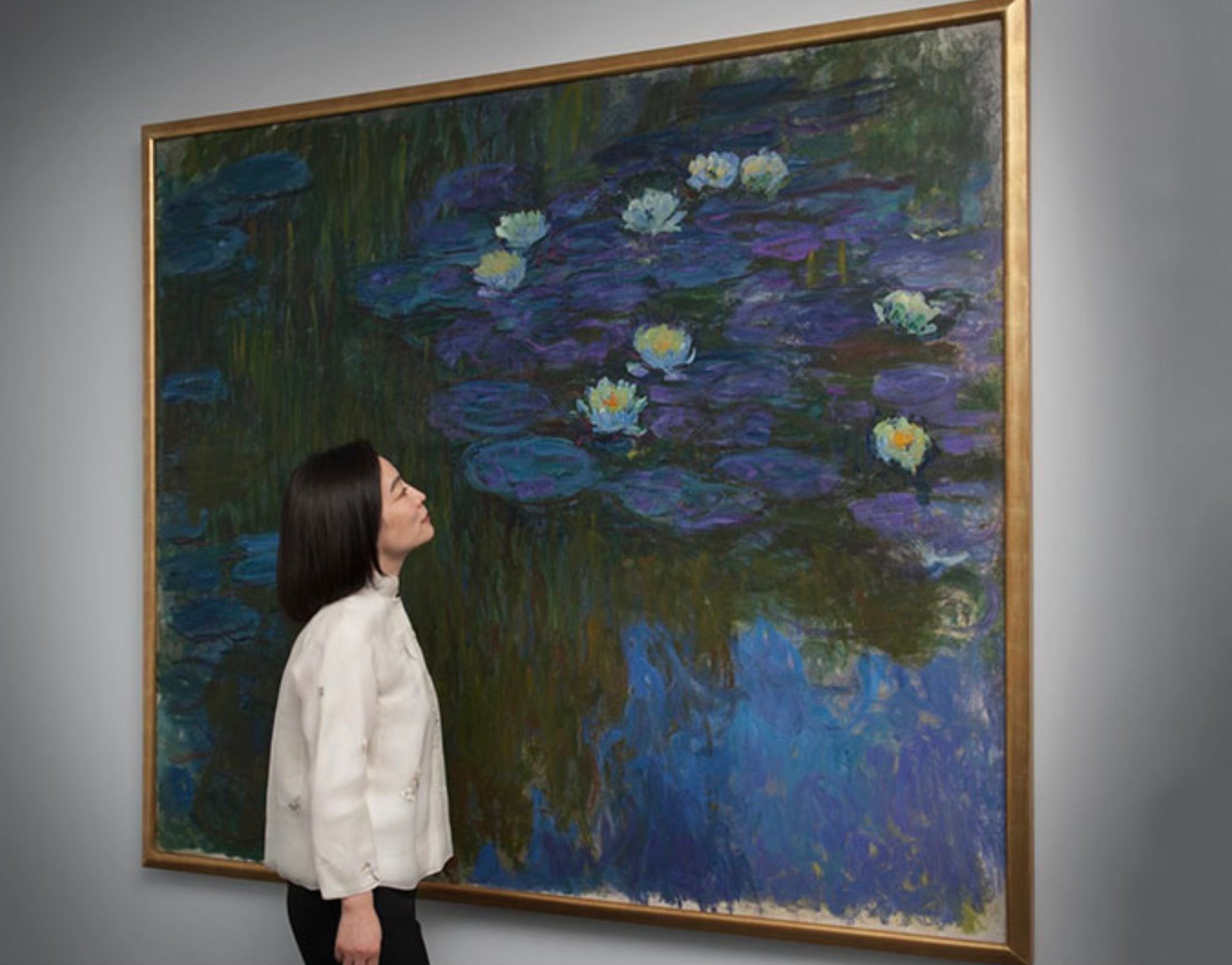
The image in question.
This isn’t about stewardship of a masterpiece; it’s about liquidity, optics, and survival. The Monet isn’t a cultural treasure in this moment—it’s collateral, stripped of aura, prepped for auction as a “rare opportunity” when in truth it’s a fire sale in designer drag.
And here’s the sting: this is the part of the market nobody wants to talk about—how masterpieces move less because of vision than because someone somewhere is broke. Daddy verdict? When the lilies cross the block, don’t see serene ponds; see shark-infested waters where beauty gets traded for solvency and the myth of art as timeless is exposed as just another IOU.
Art Basel Invents a New Way to Exclude You
Art Basel Paris unveiling its shiny new Avant-Première initiative is less about innovation and more about reheated exclusivity with a French accent. They’re selling it as a fresh vision, but it’s another velvet-rope hustle: an access tax dressed in champagne flutes.
Avant-Première doesn’t expand the conversation — it contracts it, folding more galleries into Basel’s orbit so the same handful of collectors can shop with even glossier packaging.
Daddy’s take? This isn’t democratization, it’s consolidation. The art world doesn’t need another tiered VIP pass; it needs less gatekeeping, fewer self-congratulating press releases, and more transparency about who actually benefits. Instead, Basel keeps building taller pedestals for itself and calling it progress. Avant-Première might sound chic, but it’s really just Basel putting more price tags behind the curtain and calling it theater.
RIP to the Original Journalist Daddy: Milton Esterow Exits the Art World Stage
Milton Esterow has left the building — and with him goes a certain kind of journalist daddy the art world doesn’t make anymore. Before the era of press-release prose and influencer fluff, Esterow ran ARTnews like a confessional booth for the art market’s sins. He chased Nazis, forgeries, and the quiet crimes of moneyed taste, proving that art-world journalism could still have teeth—and a tailored suit.

A true art daddy and his type writer.
He wasn’t here to sip champagne at the opening; he was there to ask who paid for it, and why. In a landscape now ruled by soft launches and softer takes, Esterow was hardboiled glamour: part detective, part priest, part problem. RIP to a real journalist daddy, who taught us that behind every good headline is someone sweating, swearing, and maybe lighting another cigarette.
$68 Million Pollock Becomes a Family Feud Prop
Hollywood bloodline meets drip-paint royalty: Molly McQueen, granddaughter of Steve McQueen, is dragging a South Carolina lawyer into court over a Jackson Pollock supposedly worth $68 million. The story? That decades ago the canvas was bartered away for a house and a motorcycle—like some roadside swap meet instead of one of the most expensive artists in the canon.
Now McQueen’s saying “not so fast,” while the lawyer clutches the painting like it’s family silver. What’s at stake isn’t just a Pollock—it’s the myth of provenance itself. This is the art world at its messiest: a courtroom brawl where all the key witnesses are dead, the paperwork is smoke, and the value is pure mythology.
The market loves to pretend provenance is a science, but cases like this remind us it’s closer to gossip notarized. McQueen wants to reassert her family’s legacy; the lawyer wants to keep his golden lottery ticket. Daddy’s take? When a Pollock turns into a prop in a dynastic soap opera, it’s less about brushstrokes and more about who can perform ownership better in court.
Art Daddy headlines
Carly Murphy Defects from Christie’s to Art Basel, Proving the Market’s New Currency Is Relationship Management
Carly Murphy just pulled a major daddy move—leaving her post as Christie’s head of client strategy for the Americas to join Art Basel as its new global head of collector and institutional relations. Translation: the woman who used to whisper to bidders in the sale room is now being paid to keep the world’s richest collectors from ghosting the fair circuit. It’s a power hire that reeks of soft panic—Basel knows the market’s cooling, the billionaires are distracted, and the VIP lounge isn’t selling art like it used to.

The new head daddy at Art Basel.
Murphy, a veteran of Sotheby’s, Phillips, and Christie’s, is Basel’s new emotional concierge: part therapist, part strategist, part velvet hammer. Her job is to make collecting feel sexy again while the rest of the ecosystem quietly downsizes. With fairs morphing into five-day group chats and auction execs defecting like it’s fashion week, Murphy’s jump is more than a résumé move—it’s a signal. The new battlefield isn’t the rostrum; it’s the relationships, and Basel just hired one of the best to make sure the money still feels wanted.
From Fortress to Flex: Sotheby’s Trades York Avenue for the Brutalist Daddy of Madison
Sotheby’s has officially sold off its York Avenue headquarters—the beige fortress that once embodied old-money auction power—and is moving into the Breuer, the most Brutalist daddy building in New York. It’s a power shuffle disguised as a real estate deal: out with fluorescent formality, in with concrete authority. York Avenue was the auction world’s corporate bunker, all gray suits and climate-controlled restraint. The Breuer, by contrast, drips mythic gravity: raw, heavy, architectural testosterone. It’s where art gets staged like ritual and market performance becomes theater.
In a perfectly timed twist, Independent 20th Century announced it will host its 2026 edition there, giving the move a delicious air of generational crossover—the auction daddy and the indie fair darling sharing a stage. This isn’t just Sotheby’s changing addresses; it’s a rebrand in stone. From York’s anonymity to Madison’s mythology, the house is trading its empire posture for cultural proximity. But under all that Brutalist swagger is the same truth gripping every legacy institution in 2025: the footprint’s smaller, the overhead’s higher, and permanence was always a performance.
The Money Laundering Olympics Kick Off: Saudi + Deutsche Ink $1.3 B Deal
Saudi Arabia and Deutsche Bank just lit the torch on a $1.3 billion cultural partnership, and Daddy’s calling it what it is: the Money Laundering Olympics. On paper, it’s about “supporting the arts” and “building cultural infrastructure.” In reality, it’s the perfect relay: Saudi gets to sprint away from its human-rights record under the banner of Vision 2030, while Deutsche Bank vaults over years of financial scandal by dressing itself up as a cultural patron.

Forget gold medals — this is all about scrubbing reputations until they shine. For the art world, this deal feels like the opening ceremony of a new era: mega-funding as sport, cultural institutions as stadiums, curators as referees, and artists as unwilling mascots.
Daddy’s take? The real competition isn’t who makes the best art, but who can spin the dirtiest money into the cleanest cultural glory. Welcome to the Olympics — where the medals are museums, and the podium belongs to whoever writes the fattest check.
Dear Art Daddy
Dear Art Daddy—my new advice column where you write in with your most pressing, ridiculous, or existential art world questions, and I answer them with the hard-earned wisdom of 12+ years in the trenches. I’ve been a reporter, a gallery girl, an intern who got paid in wine, and a “general art professional” (translation: every role you can imagine, often at the same time).
Dear Art Daddy,
How do I even begin in this industry without selling my soul, my dignity, or my tote bag? Everyone says “network,” but no one tells you where the actual network is—or if there’s Wi-Fi.
Daddy says:
You start by showing up—not showing off. The art world runs on performance, and the biggest illusion is that you need an invitation. You don’t. Go to openings, panels, dinners, pop-ups, performances in basements with bad lighting. Half the time, no one’s there for the art—they’re there to see who else showed up. So show up. Smile once, linger twice, and remember names like they’re currency.
The “network” isn’t a secret room—it’s a series of weak Wi-Fi signals powered by gossip and free wine. Your job isn’t to infiltrate it; it’s to build your own. Find the people who actually listen, who text back, who are still laughing with you three openings later. Those are your real connections.
And no, you don’t have to sell your soul—you just have to know what it’s worth. Say yes to things that feed your practice, not your panic. Say no to things that drain you and call it “strategic curation.” Keep your dignity, keep your receipts, and keep your tote bag clean. The rest of it—clout, contacts, credibility—comes with time and consistency.
The truth is, everyone’s faking it, especially the ones pretending not to. So start small, stay strange, and remember: the only thing more powerful than networking is being the person everyone wants to network with.
Dear Art Daddy,
How do you survive being outed by a middle-aged art-world writer who hasn’t been relevant since fax machines, but decided your anonymity was a personal threat to his masculinity? Do I clap back, go quiet, or just post a thirst trap with a quote from Barthes?
Daddy says:
You post the thirst trap and the Barthes quote, obviously. Because survival in this industry isn’t hiding — it’s performing louder, sharper, and with better lighting. Getting outed by a man who peaked during the fax machine era isn’t scandal, it’s confirmation: you shook something loose. You wrote, created, and occupied space in a way that made a relic panic. He didn’t “expose” you — he announced that he could no longer keep up.
These men mistake relevance for tenure. They built their empires on access and gatekeeping, and when that gate falls open — when someone new walks through without asking — they call it a breach. But what it really is, darling, is evolution. You were never hiding; you were curating. Anonymity was your armor, not your shame. It gave you freedom to play, critique, seduce — to build something from the outside that mattered more than anything inside ever could.
When he outed you, he wasn’t doing journalism. He was grasping for control, dragging the old-world tools of exposure into a digital age that no longer needs him. He wanted to make you small — to remind you that visibility comes with punishment. But visibility is the whole point. You are the headline now. You are the moment. He’s the footnote in your comment section.
So no, you don’t clap back — you ascend. Keep making the work, keep writing the jokes, keep posting the photos that make them nervous. They can’t cancel what they can’t understand, and they can’t contain what was never meant to fit in their columns. The fax machine boys are fading; Daddy’s gone wireless.
Dear Art Daddy,
I just realized my “mentor” only mentors people under 30 and attractive. Should I call him out, call him Daddy, or call HR (if that even exists in galleries)?
Daddy says:
Call him what he is — a walking symptom of institutional rot. Every industry has its false prophets, but the art world breeds them like bonsai trees: carefully pruned, aesthetically pleasing, completely rootless. The “mentor” who only uplifts youth and beauty isn’t mentoring — he’s recruiting validation.
You can’t fix him, and you shouldn’t have to. But you can document, talk, and refuse to normalize it. Quietly align yourself with other women, queers, and working artists who’ve seen this pattern too. That’s where the real mentorship is — lateral, communal, protective. Real mentors don’t need to flirt to teach.
And if you’re feeling extra righteous, outgrow him in public. Succeed visibly. Show up in the same room, thriving, while he’s still “advising” unpaid interns about aura and genius. That’s not revenge — that’s evolution. HR won’t save you, but solidarity will. The Daddy you need isn’t him; it’s the one you build around yourself.
Dear Art Daddy,
My collector keeps “forgetting” to pay until I comment something cryptic on his Instagram. How do I stay professional while still collecting my check and my dignity?
Daddy says:
You invoice like it’s foreplay: clear, direct, and impossible to ignore. Send the PDF, give a deadline, follow up once — politely, but like a threat wrapped in satin. “Hi dear, gentle reminder—payment due Friday, best.” That’s not nagging; that’s boundaries.
The art world runs on “creative accounting,” which is just a fancy way of saying people love to delay paying artists because it makes them feel powerful. Don’t let them. Money is not a mood. You did the work; you get the check.
If he still ghosts, go public with grace: post a photo of the work with a caption like “finally found its forever home 🥂” — before the transfer even clears. Nothing terrifies a collector like social accountability. And remember: professionalism isn’t politeness. It’s persistence dressed in silk.
You’re not chasing payment — you’re teaching someone that art isn’t free. That’s not petty, it’s pedagogy.
Dear Art Daddy,
I got invited to an “emerging artist dinner,” but it’s in a warehouse with no chairs and everyone brought their own mezcal. Am I networking or being hazed?
Daddy says:
You’re doing both, babe. Every art-world gathering is equal parts initiation ritual and performance piece. The real trick is knowing which one you’re in before the mezcal runs out.
Smile. Mingle. Collect business cards you’ll never use. Then leave before the group photo — that’s the art-world equivalent of Irish goodbye excellence. Post a blurry shot of a candle and caption it “left before dessert.” The ones who stay for cleanup aren’t the ones getting shows.
But here’s the truth: these events are tests of stamina disguised as opportunity. They’re designed to make you grateful for proximity when you should be asking for access. So eat a small plate, clock the dynamics, and find one person who seems just as confused as you. That’s your real connection.
Remember: the art world thrives on exclusivity, but half of it’s make-believe. If the dinner has no chairs, that’s not avant-garde — it’s unpaid labor with lighting design.
In a NYT Style section manner, I also want to set forth some taste making elements.
I am reading: A Lover’s Discourse by Barthes
I am drinking: Waterloo Ruby Red Tangerine seltzer
I am looking at: All the men over 60 with real estate in other countries on daddy apps. I am also going to auctions to meet men over 60 with real estate in other countries so this counts as a form of looking.