

There are certain artists whose work feels inseparable from a place, and for me Emily Coan is one of them. While her paintings are unmistakably contemporary, I often find myself thinking about the Hudson Valley’s long artistic history when looking at them. The region has spent nearly two centuries attracting painters, writers, dreamers, mystics, burnouts, city escapees, and anyone convinced a better version of themselves might be waiting somewhere along the Hudson River. Few places in America carry quite as much artistic mythology, and Coan’s work feels deeply connected to that legacy while remaining entirely her own.
Beginning in the nineteenth century, the Hudson River School painters transformed the American landscape into something mythic, romantic, and symbolic. Their paintings helped define an idea of the Hudson Valley that still persists today: a place where nature, beauty, ambition, and reinvention converge. In many ways, Coan feels like a contemporary intervention into that tradition. Where the Hudson River School often centered the landscape itself, Coan places women firmly at the center of the picture. Her paintings are informed by art history, personal experience, friendship, memory, and the female gaze, creating scenes that feel at once intimate and mythological. Women gather in fields, inhabit forests, lounge in interiors, and move through landscapes that feel distinctly Hudson Valley while also existing slightly outside of time. The result is something that reads almost like a feminist reimagining of the region’s artistic mythology, one that replaces conquest and grandeur with intimacy, psychology, desire, community, and embodiment.
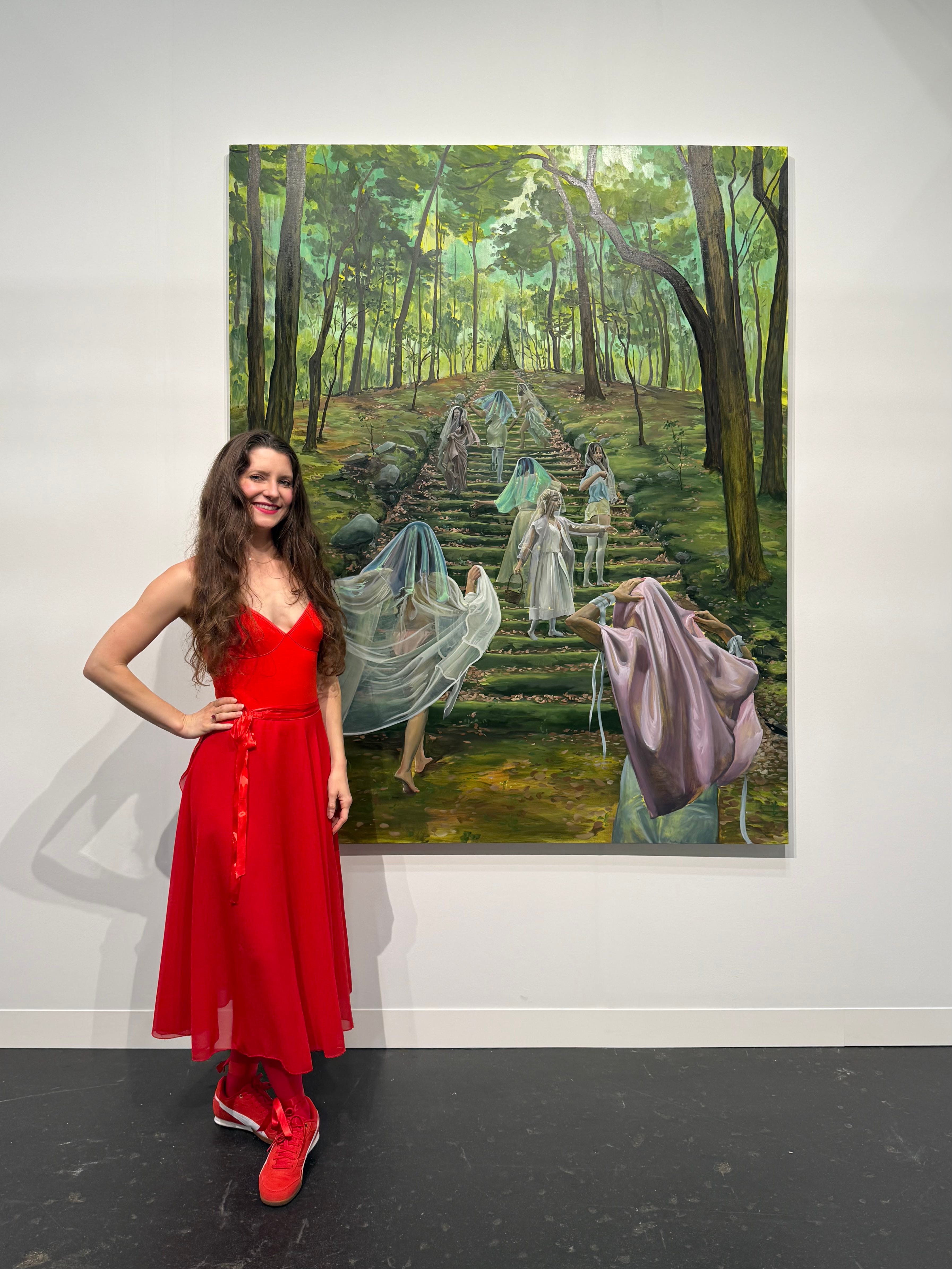
What I particularly admire about Coan’s work is the tension it maintains between beauty and unease. The paintings are lush and seductive, but never simplistic. They invite projection while resisting easy interpretation. Though based in the Hudson Valley, Coan remains deeply connected to New York City and the broader conversations shaping contemporary painting today, occupying that increasingly familiar space between both worlds. A represented artist with DIMIN, Coan has steadily built a reputation over the last several years, including a presentation at The Armory Show last fall.
This week she’ll be participating in Upstate Art Weekend at Foreland in Catskill, New York. Upstate Art Weekend has become the art world’s annual migration north, transforming the Hudson Valley and Catskills into a five-day circuit of more than 160 museums, galleries, artist studios, sculpture parks, nonprofits, and other cultural spaces. Equal parts art pilgrimage and Daddy safari, it’s where collectors, curators, artists, and weekenders spend their days bouncing between exhibitions and converted barns in search of the next great discovery. It’s also peak Daddy Anthropology. Alongside Chelsea dealers in hiking boots and collectors who somehow own both a Donald Judd and a tractor, you’ll inevitably encounter the Bard dad: identifiable by his linen shirt, salt-and-pepper beard, tote bag, and unwavering belief that the best exhibition is always twenty-three minutes farther down a gravel road. (Hi, Tom, if you’re reading this, this is absolutely a compliment.) (upstateartweekend.org)
In a plot twist that Daddy fully supports, an artist best known for painting women will be painting men. Whether this yields a major new body of work or simply helps advance my ongoing search for a handsome divorced Hudson Valley dreamboat remains to be seen. Ahead of Upstate Art Weekend, I caught up with Coan to talk about painting, place, art world economics, extraterrestrial channeling, and her personal definition of an Art Daddy.
Art Daddy: You moved to NYC in 2015, during a very different time in the art world. As an artist, what are some of the biggest changes you’ve seen, both in terms of opportunity and how artists are expected to position themselves today?
Emily Coan: Wow, did you anticipate the financial crashout I had last night when writing these questions? I wish the market were the market of ten years ago for this shining press moment I’ve been having. Ironically, a recent Art in America article insinuated I paint what I paint as a money grab... LOL.
I’ve dedicated my whole life to art since I was 18 years old, and I’ve only spent two or three of those years making more than an entry-level white-collar income. It pisses me off, but I am so obstinate about being an artist. I’d rather live in a shoe than get another job, which unfortunately clashes with my expensive taste.
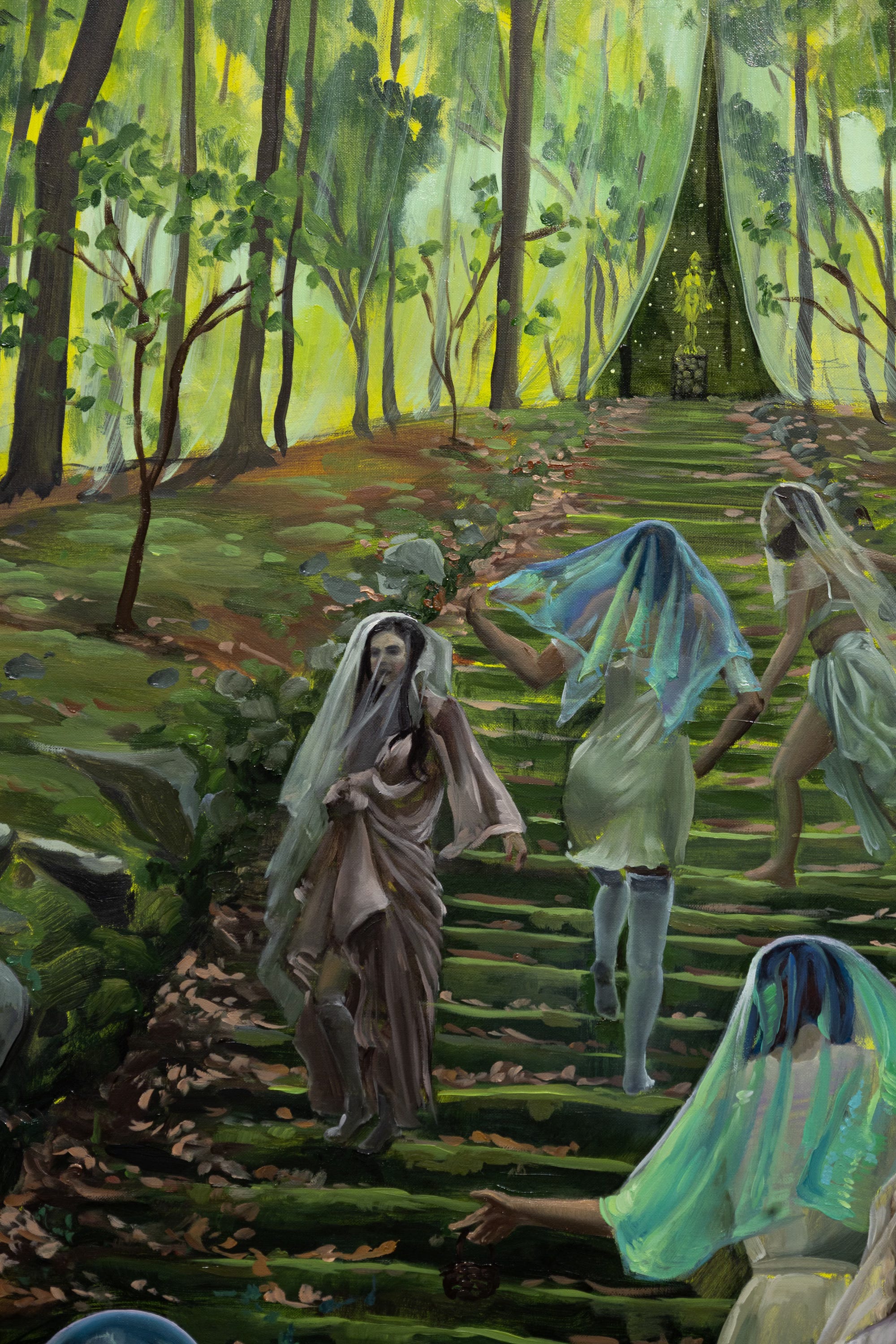
AD: Your work over the last several years has focused on the female form, often rendered in a way that feels both familiar and slightly unsettled. How did this visual language develop, and what draws you to that space between recognition and unease?
EC: I’ve ended up offering something a little different and uncanny to the mainline conversation about female representation in art, unbeknownst to myself while making the work. I am painting a type of way of existing as a woman. I am painting with energy.
Certain types of women come up to me feeling deeply recognized by the work, while others feel very triggered by it and angry about it. I have always felt that I, as a person, have been someone others project onto. I have been put on a pedestal and then knocked off, expected to be a savior and then punished when I fall short.
I think the work has a similar effect. It becomes a projection screen for others. It brings things up in people.
